Women and Testosterone Therapy: More Research Needed

Women and Testosterone Therapy: More Research Needed
For the last few years, Shanahan, an ob-gyn in South Lake Tahoe, CA, has prescribed supplemental testosterone (in ointment or pill form) for patients who have experienced a loss of sexual interest with the onset of menopause. These were patients who had not been helped by traditional hormone replacement therapy (HRT).Of the approximately 70 women who have used the ointment (a 2 percent testosterone solution, applied to the external genitals), about half noticed a significant increase in their sex drive. For those who did not, Shanahan prescribed Estratest (manufactured by Solvay), an oral drug combining estrogen and testosterone.Shanahan said more women experienced a libido boost from Estratest, which delivers more testosterone than the genital ointment. But a number of women taking the pill also experienced testosterone-related side effects including oily skin, acne and, in a few cases, "aggressive behavior."For some patients, the side effects were reason enough to discontinue the drug. One woman who quit Estratest because it made her feel aggressive.What Can a "Male" Hormone Do for Women?Testosterone, the primary male sex hormone, has been associated with such archetypal "male" traits as aggressiveness and active libido. Although testosterone is an androgen (male hormone), it also is produced by women, and is, in both sexes, the chief hormone involved in sex drive.Both men and women manufacture the hormone in their adrenal glands. Men’s testes produce additional testosterone — about 10 times as much — while women release smaller amounts from their ovaries. With menopause, though, the ovaries decrease their production of testosterone.Even after menopause, most women continue to release enough testosterone from the adrenal glands to maintain an active sex drive. But others experience a gradual or sudden loss of interest in sex.Hence, some doctors have taken to prescribing testosterone supplements for women even though the practice is still considered controversial in the United States compared to Britain, where it is more common and accepted.Susan Cruzan, a public affairs spokesperson for the U.S. Food and Drug Administration, said, "There are no testosterone drugs that are FDA-approved for use in women [for the treatment of sexual health]." (Estratest, though not FDA-approved for any indication, is nonetheless on the market, a situation that exists because of "complicated legal reasons," notes Cruzan.)For decades now, millions of American women have taken hormones to treat the symptoms of natural menopause or for surgical menopause, which refers to the removal of the ovaries for medical reasons. Typically, HRT consists of supplemental estrogen, sometimes combined with progesterone. In addition to helping protect menopausal women against heart disease and bone loss, HRT has been effective in treating menopause symptoms such as hot flashes, mood swings, sleeplessness, and the range of conditions that can adversely affect a woman’s sex life, including vaginal shrinkage, dryness and loss of elasticity.Women who have turned a cold shoulder to lovemaking because of intrusive menopause symptoms frequently find relief with HRT. Surveys show that even non-sexual symptoms of menopause, like mood swings and fatigue, can disrupt desire.Alleviating symptoms like these, as well as the vaginal conditions that can make intercourse more painful than pleasurable, is often enough to restore a woman’s desire for sexual activity. And, according to Theresa L. Crenshaw, MD, estrogen also can help restore a woman’s "receptive" sex drive, making her more responsive to touch and willing to be approached sexually by her partner.But for women whose loss of sexual interest is not helped by traditional HRT, supplemental testosterone may offer an alternative."While estrogen, when used alone, is often enough to maintain normal female well-being, including sexual desire and activity," writes Crenshaw, "testosterone often needs to be added to ensure robust, dependable sexual desire and response." Besides boosting sex drive, the hormone can help relieve hot flashes and other conditions related to menopause, and is thus an option for women who cannot tolerate high levels of estrogen.Because testosterone’s effects in women have not been widely researched, Shanahan said she only prescribes it to patients who have tried estrogen-based HRT without success (and in a few cases, to premenopausal women who were found to have "extremely low" levels of testosterone).Clearly, the interest is there: When Shanahan appeared last year on TV’s "Oprah" to discuss testosterone’s impact on postmenopausal female libido, the response was enthusiastic. "After that show, women were calling me every day," Shanahan said.Pros and Cons of Testosterone for WomenWhether they are willing to prescribe testosterone for women, physicians agree that there is a need for more research on the subject."There are anecdotal reports of women helped by testosterone," said Adam J. Duhl, MD, a gynecologist and instructor in maternal and fetal medicine at Johns Hopkins Medical Institutions in Baltimore. "But we have yet to see any true statistical and clinical evidence that it makes much difference."There is also the issue of side effects: Besides aggressiveness and acne, testosterone can cause deepened voice and the growth of facial hair. In addition, said Duhl, it has been shown to lower the rates of HDL, the "good" cholesterol, while increasing heart-harmful LDL cholesterol — "the exact opposite of what estrogen does." For these reasons, he has never prescribed it.
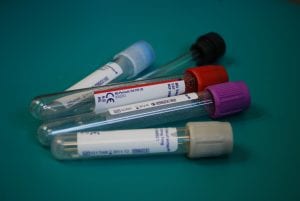 Empty blood collection vials; image by kropekk_pl, via Pixabay.com.

About Ruben Harutyunyan
Advanced SEO specialist working with clients from the USA, UK, and Russia. My hobby is writing about health, skincare, and sexual education. I love football and am a big fan of Arsenal FC.