U.S.-supplied Facial Recognition is Leading to Protester Arrests

U.S.-supplied Facial Recognition is Leading to Protester Arrests
A recent report found, in 2,000 Russian court cases, U.S.-based facial recognition technology was used by the Russian government to crack down on anti-war protests, leading to arrests. According to the report, Moscow court records confirmed that the city's extensive video surveillance network "played an important role in the arrests of hundreds of protesters."The report indicates that multiple Russian companies, and one Belarusian company, are using algorithms trained and powered by hardware from U.S. companies like Intel and Nvidia. One company received $40,000 in prize money from a U.S. intelligence agency for participating in the initial test program. The Russian companies that use the software are NtechLab, VisonLabs, and Tevian – all based in Moscow.In 2017, there were 160,000 such cameras throughout the city with more than 3,000 connected to facial recognition systems, according to Moscow's Department of Information Technologies. Court records indicate that the cameras were primarily used to detain people during the 2021 anti-government protests but are now being used to identify, intimidate, and detain anti-war activists and dissenters of Russia's invasion of Ukraine via law enforcement arrests.
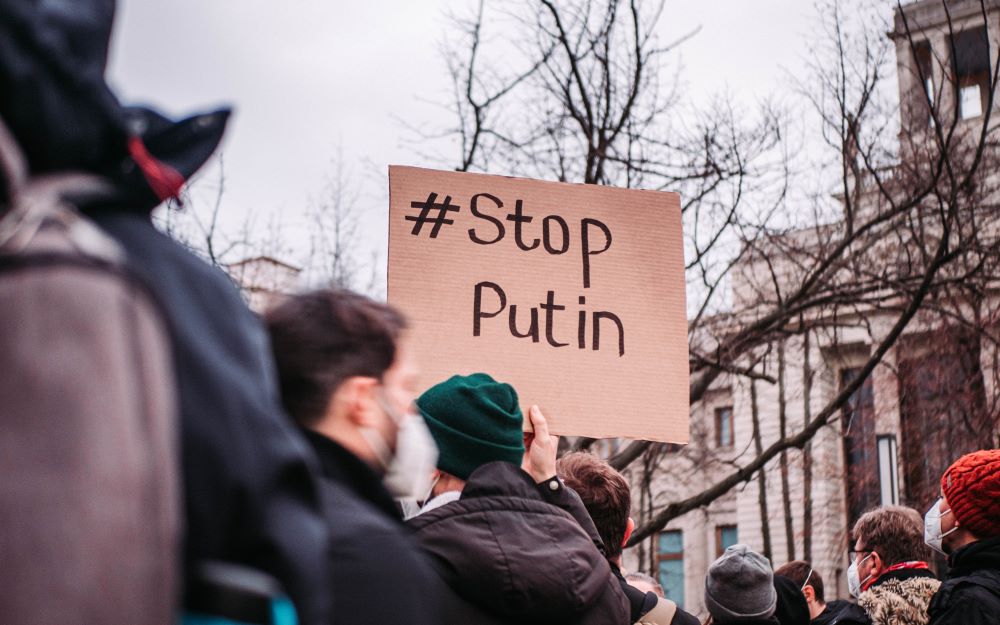 Photo by Matti Karstedt from Pexels
Sources:
Russia uses facial recognition technology from US companies to spy on anti-war protestors, says reportU.S. Hardware Is Fueling Russia's Facial Recognition Crackdown on Anti-War DissidentsFacial recognition is helping Putin curb dissent with the aid of U.S. tech
About Sara E. Teller
Sara is a credited freelance writer, editor, contributor, and essayist, as well as a novelist and poet with nearly twenty years of experience. A seasoned publishing professional, she's worked for newspapers, magazines and book publishers in content digitization, editorial, acquisitions and intellectual property. Sara has been an invited speaker at a Careers in Publishing & Authorship event at Michigan State University and a Reading and Writing Instructor at Sylvan Learning Center. She has an MBA degree with a concentration in Marketing and an MA in Clinical Mental Health Counseling, graduating with a 4.2/4.0 GPA. She is also a member of Chi Sigma Iota and a 2020 recipient of the Donald D. Davis scholarship recognizing social responsibility. Sara is certified in children's book writing, HTML coding and social media marketing. Her fifth book, PTSD: Healing from the Inside Out, was released in September 2019 and is available on Amazon. You can find her others books there, too, including Narcissistic Abuse: A Survival Guide, released in December 2017.