
Categories | Featured Article Article

Study Reveals General Anesthesia Activates Sleep Circuit

May 6th, 2019 Featured Article 3 minute read
Article Image

Study Reveals General Anesthesia Activates Sleep Circuit

Drugs that induce general anesthesia activate a brain circuit that triggers sleep, new research reveals. The scientists at Duke University in Durham, NC suggest the discovery “will help to develop better drugs that can induce sleep with fewer adverse reactions.”  Until this study, it had not been clear how these drugs produced a loss of consciousness.The colleagues describe how they discovered the cells in the hypothalamus at the base of the brain.  The cells, “which consist mainly of neuroendocrine cells, sit in and near the supraoptic nucleus” in the hypothalamus “are persistently and commonly activated by multiple classes of [general anesthetic] drugs,” they write.  Like nerve cells, neuroendocrine cells receive signals from the nervous system except that they respond by producing and releasing hormones.  Almost all of the body’s organs contain neuroendocrine cells.
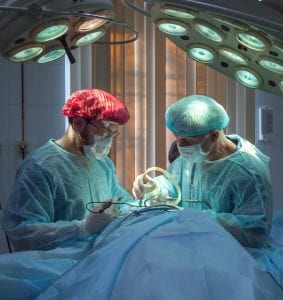
Study Reveals General Anesthesia Activates Sleep CircuitPhoto by Olga Guryanova on Unsplash

The research demonstrates, for the first time, how general anesthetics work, while focusing on the important role that hormones play in controlling the brain.  For decades, the most common theory about general anesthesia was that the drugs inhibit brain circuit activity to the point where the person cannot move or feel pain.  This was debunked, however, after scientists realized certain brain circuits are very active while one sleeps, which helps to consolidate information acquired while awake and, at the same time, help an individual learn new information while they are asleep.Senior study author Fan Wang and her colleagues wanted to investigate the following two questions: What if general anesthetics did more than inhibit brain activity?  Could the substances also be activating some circuits?  To do so, they induced general anesthesia in mice using diverse drugs that anesthesiologists use.  They tagged the drugs with molecular markers, so they could trace their destinations in the rodent’s brains.  The most common destination turned out to be the supraoptic nucleus.  The researchers were not expecting to find that the neuroendocrine system had such an active role in general anesthesia.Then, they performed further experiments using advanced chemical and optical techniques allowing them to switch this particular group of cells on and off in the mice.  Switching the cells on caused the creatures to stop moving and fall into a deep sleep.  Switching them off stopped the mice from being able to fall asleep.Study author Dr. Luping Yin, who works in Wang’s laboratory, said that many drugs for inducing sleep “have troublesome side effects.”  According to a 2005–2010 national survey that the Centers for Disease Control and Prevention (CDC) posted in 2013, “around 4 percent of adults in the United States said that they had used prescribed sleep aids in the previous 30 days.”“If we can find ways to manipulate this neural circuitry, perhaps by targeting hormones or small peptides, then it could lead to the development of better sleeping pills,” Yin said.Already, some believe that the sleep circuit can be properly activated by stimulating certain neuropathways.  The Brain Life Center, for example, uses technology to do just this. “Quality sleep allows our brain to build and strengthen neurological pathways and can help with our memory, focus and concentration,” according to the site.  The new study many further advance these proven technologies as well.

Sources:

Study reveals how general anesthetics affect the brainWE FINALLY KNOW HOW GENERAL ANESTHESIA WORKSThe Brain Life Center

Sara E. Teller

About Sara E. Teller

Sara is a credited freelance writer, editor, contributor, and essayist, as well as a novelist and poet with nearly twenty years of experience. A seasoned publishing professional, she's worked for newspapers, magazines and book publishers in content digitization, editorial, acquisitions and intellectual property. Sara has been an invited speaker at a Careers in Publishing & Authorship event at Michigan State University and a Reading and Writing Instructor at Sylvan Learning Center. She has an MBA degree with a concentration in Marketing and an MA in Clinical Mental Health Counseling, graduating with a 4.2/4.0 GPA. She is also a member of Chi Sigma Iota and a 2020 recipient of the Donald D. Davis scholarship recognizing social responsibility. Sara is certified in children's book writing, HTML coding and social media marketing. Her fifth book, PTSD: Healing from the Inside Out, was released in September 2019 and is available on Amazon. You can find her others books there, too, including Narcissistic Abuse: A Survival Guide, released in December 2017.

Related Articles