
Categories | News & Politics Article

Scientists Map Genome for Snake Venom to Develop Treatment Options
January 22nd, 2020 News & Politics 3 minute read
Article Image

Scientists Map Genome for Snake Venom to Develop Treatment Options

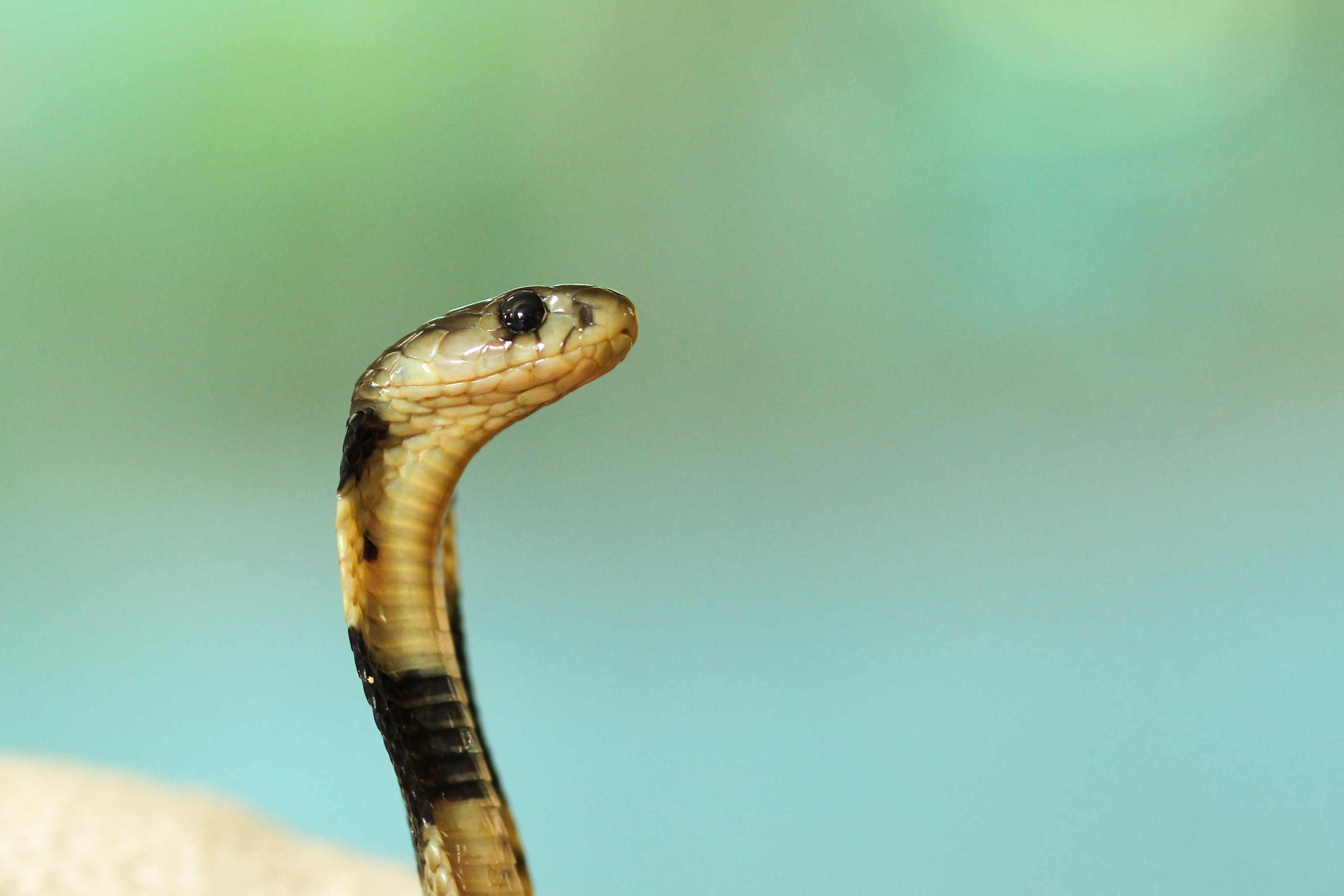
The Centers for Disease Control and Prevention (CDC) estimates that thousands of people are bitten by snakes in the United States every year, yet few die from the bites.  In other countries around the world, however, snake bites lead to more than 400,000 amputations and 100,000 deaths annually, it reports.Recently, scientists recreated the genome of one of the deadliest snakes in the world, the Indian cobra, in an effort to develop more advanced treatment options that could potentially save lives.  To date, antivenom has been the only effective medicine, but it will only work if a snake bite victim is able to receive medical attention in time, and sometimes there’s just a few minutes to spare.  Producing the medicine is also difficult.
Scientists Map Genome for Snake Venom to Develop Treatment OptionsPhoto by James Wainscoat on Unsplash

Scientists must first milk the venom from a snake’s fangs over and over again until there is a large enough amount to use.  Next, it is injected into a large animal like a horse to generate antibodies.  Blood is drawn and it has to undergo a multi-step process to isolate its active ingredients.  The resulting product could contain animal antibodies that can induce a harmful immune response in the bite victim once the antivenom is administered.  This process is incredibly expensive at roughly $2000 for one vial.  Treatment of just one bite could require more than 25 vials.Scientists are, therefore, in the process of creating the genomic technologies to synthesize antivenom, which will, in turn, hopefully treat victims more inexpensively and effectively.  Mapping the DNA of a snake’s venom is the first step.In Nature Genetics, researchers detailed their process for their mapping of the genome of Naja naja, the Indian cobra.  They found “12,346 genes expressed in the venom glands,” what they call the “venom-ome” of the snake.  Of these, they found “139 toxin genes.”  Then, they “designated 19 of these genes as “venom-ome specific, expressed only in the venom gland, and that are responsible for a wide range of symptoms in humans, including heart-function problems, paralysis, nausea, blurred vision, internal bleeding and death,” the study details.  As more snake genome mapping procedures are completed, the scientists contend, they may be able to combine toxins and create broad-spectrum antivenoms that could work against bites from multiple species.“It seems like something we should have figured out twenty years ago, but until now those areas of the snake genome have been total black boxes,” says Todd Castoe, an evolutionary geneticist at the University of Texas at Arlington.The study’s senior author, Somasekar Seshagiri, a former staff scientist at Genentech and now the president of SciGenom Research Foundation, a nonprofit research center in India, said, “As much as we fear them, snakes are a remarkable product of evolution, present on every continent except Antarctica, and they’ve been around much longer than we have.  This will take some time, but we can now move toward modernizing the way we create antivenoms…Antivenoms will no longer just be like some magic potion we pull out of a horse.”

Sources:

Scientists Figured Out the Indian Cobra's Genome—at LastWhen the Cobra Bites, You’ll Be Glad Someone Sequenced Its Genome

Sara E. Teller

About Sara E. Teller

Sara is a credited freelance writer, editor, contributor, and essayist, as well as a novelist and poet with nearly twenty years of experience. A seasoned publishing professional, she's worked for newspapers, magazines and book publishers in content digitization, editorial, acquisitions and intellectual property. Sara has been an invited speaker at a Careers in Publishing & Authorship event at Michigan State University and a Reading and Writing Instructor at Sylvan Learning Center. She has an MBA degree with a concentration in Marketing and an MA in Clinical Mental Health Counseling, graduating with a 4.2/4.0 GPA. She is also a member of Chi Sigma Iota and a 2020 recipient of the Donald D. Davis scholarship recognizing social responsibility. Sara is certified in children's book writing, HTML coding and social media marketing. Her fifth book, PTSD: Healing from the Inside Out, was released in September 2019 and is available on Amazon. You can find her others books there, too, including Narcissistic Abuse: A Survival Guide, released in December 2017.

Related Articles