
The Long, Slow Suburban Decline
The Long, Slow Suburban Decline
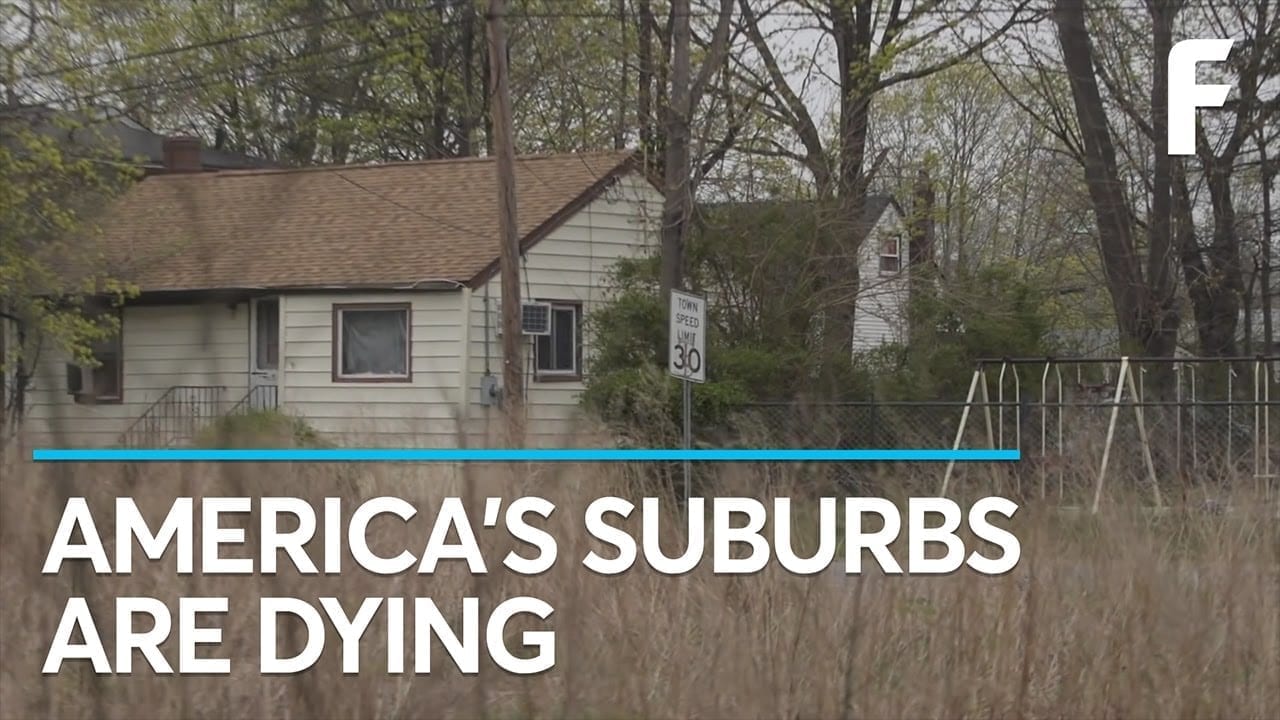
Cities and the suburbs around them are in a state of transition. We used to hear about urban decay and white flight, but that trend has been reversing for a while as the Millennials come into their own. Now, we're enjoying a revitalization of some cities, and facing a long, slow suburban decline.Before we had so many people, there wasn't as much space between the cities and the rural hinterlands. However, after World War II, returning servicemen wanting to marry their sweethearts and start families combined with pent-up demand and saved wages to create the suburban exodus. Especially in car-centric areas like Detroit and throughout what's now the rust belt, you could have your tract housing “castle” on a dreamy quarter-acre of recent farmland, with cleaner air, safer streets, and only a short commute for Dad to get to his job in the city.Inner suburbs popped up like concentric rings around urban centers in order to accommodate this societal trend, with inexpensive, mass-produced houses slapped together all at once. Many of those houses are turning a venerable 70 years old now, and sadly, those cheap construction materials are reaching their expiration date. Whole neighborhoods full of houses falling apart at the same time contributes to the suburban decline. There is little incentive to rebuild in areas where the housing market hasn't significantly rebounded since the 2007-2008 market collapse.At the same time, our values are changing. Instead of a pretty quarter-acre that you have to keep mowed and watered, young professionals are gravitating towards walkable, dense city centers with nearby amenities, preferring affordable mass transit systems to the expense and trouble of car ownership. This is leading to a kind of flip-flop, with gentrification of the more attractive urban areas, such as San Francisco, and greater yet reluctant departure for suburbs by those with more modest means.Those priced out of the urban housing market have to drive a pretty long way to find affordable housing, leading to a re-stratification where the areas in suburban decline become rings of poverty, police/citizen tension, unemployment, and opioid addiction. When you can't afford a car in the car-dependent suburbs, it's harder to climb out of poverty. Instead of benefiting economically from city incomes brought back to the 'burbs, suburban decline both creates and results from a downward spiral of falling tax revenue and businesses that close or relocate closer to affluent customers in the cities, bleeding jobs away from the areas that need them the most. Poorer suburbanites who can only afford to rent the foreclosed houses that speculators bought as investments at the bottom of the market rub elbows with aging, isolated Baby Boomers who don't want to leave their homes, yet find it harder to climb the stairs, and will eventually be unable to drive.
 Tract housing near Union, Kentucky, from the air. Suburbs like this could be re-imagined as collections of mini-farms, turning lawns into productive food plots. Public domain photo by Derek Jensen, courtesy of Wikimedia Commons.
Sources:
Levittown created America’s notion of the suburbs, but it reshaped the city too
The New Suburban Crisis
Here's Why American Suburbs Are Dying
The Complications of our Deteriorating Inner Ring Suburbs
Strung out in suburbia: Opioid drug crisis hits the suburbs
Are American Suburbs Dying?
Poverty is now largely a suburban challenge
Americans’ Shift To The Suburbs Sped Up Last Year
Many boomers in denial over problems they face growing old in suburbs
Why Renters Are Moving to the Suburbs
Fixing the New Urban Crisis
About Dawn Allen
Dawn Allen is a freelance writer and editor who is passionate about sustainability, political economy, gardening, traditional craftwork, and simple living. She and her husband are currently renovating a rural homestead in southeastern Michigan.