
Las Vegas Water Problem Won't Stay There
Las Vegas Water Problem Won't Stay There
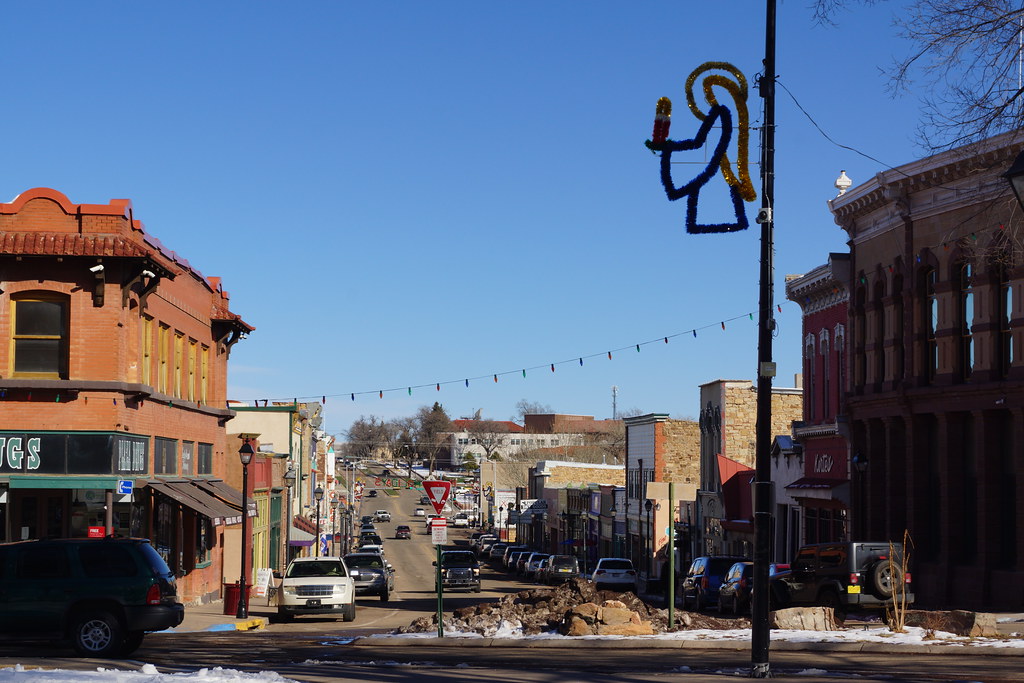
Last week's post provided a big-picture look at the coming convergence of big ticket expenditures during a time when Americans are less able to afford them than anytime in recent memory. Infrastructure built during the post-war boom is reaching the end of its useful life and will need to be replaced (or not), just as we're going to have to continuously rebuild after bigger, more severe storms, floods, and wildfires. On top of both, many believe a rapid transition to renewable energy (and all the additional infrastructure that would require) is needed to mitigate the worst effects of the climate chaos to come. This week, let's look at how these converging crises meet up in a little town in New Mexico. The Las Vegas water problem is a miniature version of the bigger issues we'll all be dealing with soon enough.Las Vegas, NM, is a small town of around 13,000 people, established in 1835 on a land grant from the Mexican government before it was claimed by the United States. Earlier this spring and summer, the Hermits Peak/Calf Canyon wildfire burned through the area. The largest and most destructive fire in New Mexico history, it burned over 340,000 acres of brush, grass, and conifer forest, destroying or damaging nearly a thousand structures east of Santa Fe, dangerously close to little Las Vegas.Then, heavy monsoon rains came and soaked the acres of wildfire ashes. In a way, this was great, because the area is in deep drought, made worse by dwindling Colorado River water. Every drop is needed. However, as journalist Justin “Beau” King put it, have you ever put out a campfire with water? Rain and ashes combined into a grey sludge that flowed into the Gallinas river, one of the city's two water sources. The Las Vegas water problem was already bad enough, with conservation measures made necessary by the western drought. Now, half their water is undrinkable, filled with sooty, ashy residue that can't be filtered out and may take years to dissipate.What's worse, adding chlorine to disinfect the water for municipal use is dangerous. When the chlorine interacts with the organic materials in the ashy residue, it forms carcinogenic compounds. Mmmmmm.
 Street scene in Las Vegas, NM. Photo by Greg Gjerdingen, via Flickr. CC BY 2.0
Sources:
Let's talk about the other Las Vegas....City of Las Vegas narrowly avoids running out of waterPermanent water solution for Las Vegas residents could take 4-5 yearsMonsoon flows temporarily prop up New Mexico watersDisaster upon disaster: Wildfires are contaminating the West’s depleting water with ashy sludgeStorrie Lake pre-treatment system begins arriving in Las Vegas
About Dawn Allen
Dawn Allen is a freelance writer and editor who is passionate about sustainability, political economy, gardening, traditional craftwork, and simple living. She and her husband are currently renovating a rural homestead in southeastern Michigan.