
Is it Ethical To Monitor Remote Employees?

Is it Ethical To Monitor Remote Employees?
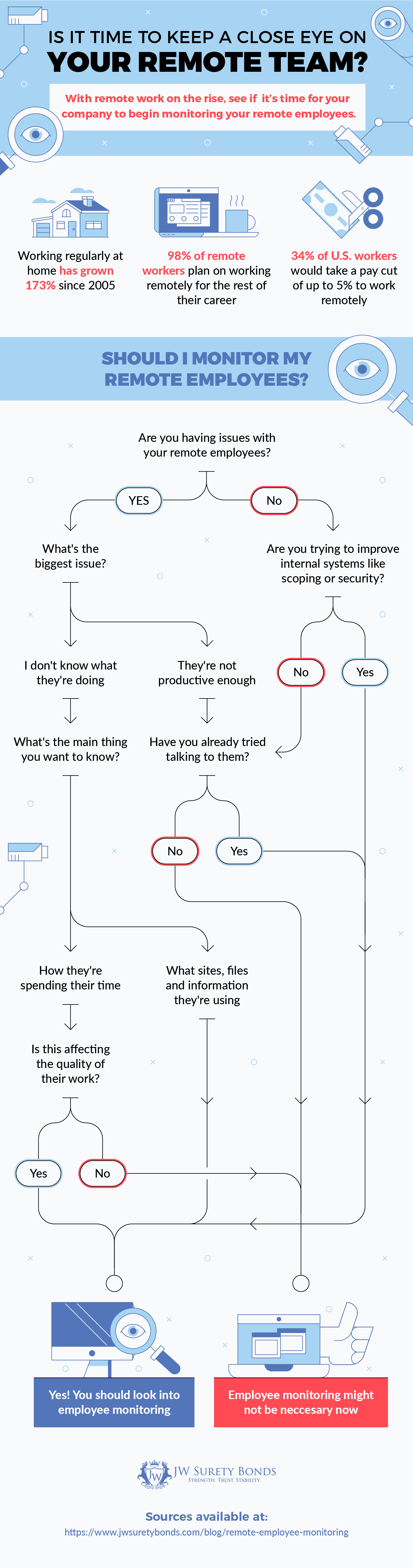
Many businesses turned to remote work as a way to support employee health and safety while keeping operations afloat. Although some businesses are choosing to gradually send their employees back to the office, many employees want to continue working from home after the current climate settles.Managing remote workers is much different than managing on-site employees. The lack of face-to-face interaction can take a toll on employee engagement, security, and productivity if not addressed proactively and directly. Managers can solve employee engagement issues by employing different types of communication methods. Solving for security and productivity, on the other hand, calls for more complex solutions that may involve some forms of remote monitoring for your team.Your team might not be thrilled with the thought of increased monitoring right off the bat, but it’s crucial for you to understand your goals, the effort it will take and the pros and cons of increased monitoring before diving into a full-blown remote monitoring policy.Remote Monitoring Best PracticesYou’ll need to do some leg work to ensure you’re doing everything you can to. Here are just some things you’ll need to do when considering a remote work policy:
Engage your team throughout the process: It’s a best practice to at least speak with your team to get their thoughts before beginning on the process. Letting your team give their input early allows you to hear and address any fears and concerns they may have while also educating them on your goals.
Test out tools: There are a number of monitoring tools on the market that range in price and features. Choose a program that aligns with your goals, budget and falls in line with what your employees are comfortable with based on their early feedback. You should also allow a small group of your team to test out the tools ahead of time to see how they like it.
Train your team and account for learning curves: New technology and policies take some time to adjust. Factor in time for training sessions and the time it takes for everyone to get settled.
Readjust as ongoing feedback comes in: Some may have different opinions of your monitoring software or your new policies as they’re put in motion. Make employees comfortable enough to share any grievances with you, especially if it relates to serious issues like privacy.
Consider other protections: We don’t like to consider it, but things like employee theft and other types of employee dishonesty can happen despite a robust monitoring policy. Hiring a business lawyer to advise you throughout the process of putting together a monitoring program can help you understand your options if you find a dishonest employee and advise on other things you can do to protect your business if that happens. Other protections like fidelity bonds financially protect you and your clients or customers if an employee commits fraud or other dishonest acts.
What sites your employees visit
What files your employees access
How much time they spend on projects
How long they’ve been away from their desk

About Eric Weisbrot
Eric is the Chief Marketing Officer of JW Surety Bonds. With years of experience in the surety industry, he is also a contributing author to the surety bond blog. He has held a range of different roles within the surety industry, from agent assistant to bond issuer, which gives him a unique insider perspective on surety related topics.