How to Get Your Insurance to Pay for Your Replacement Roof

How to Get Your Insurance to Pay for Your Replacement Roof
Experiencing roof damage and needing a replacement can be daunting and financially draining. While DIY methods might offer a cost-effective solution, they aren't always the best choice. Roofing repairs can be risky and complicated; a faulty job could lead to more extensive damage. DIY can also complicate insurance claims when a professional replacement becomes necessary. So, what happens when your roof needs an overhaul, and how can your insurance company help? This article explores the type of roof damage your policy may cover, the process for filing a claim, and common reasons for insurance denial.What types of roof damage are typically covered by homeowners insurance? Homeowners' insurance companies cover some types of roof leaks and roof damage but not others. Usually, these coverages are called “covered peril” and include the following: ● Wind and hail.● Lightning strikes.● Fire and smoke damage.● Snow and ice weight damage.● Vandalism.● Falling objects. Natural disasters, no-fault accidents, and the actions of others are generally covered under your roof policy. These are covered by “deductibles,” which can be a percentage of your entire house insurance policy cost or roof replacement. The deductible amount is generally based on how the damage was caused. Other types of roof damage that are not covered by homeowner’s insurance include: ● Animal damage, including termites, carpenter ants, and so on.● Homeowner neglect - if you fail to replace an imperiled roof.● Gradual wear and tear and aging● Earthquakes● Rot or mold. It’s also worth noting that homeowners insurance may cover some roofs but not others. Depending on the types of materials used to construct the roof, the deductible may be higher or lower. For example, colorbond roofing is one of the best roofing materials on the market, but it may or may not be covered by your homeowners’ insurance. Some insurance companies have policies that cover your roof if they’re reconstructed using the same type of roofing or a different type, up to a maximum dollar amount. Check these provisions before soldiering on and replacing your damaged roof with a better, more expensive material.What is the process for filing a roof replacement claim? If you need a new roof and are almost certain that your homeowners’ insurance company will replace it, it’s time to start filing a roof replacement claim. Your first step should be to visually inspect your roof from a safe distance to see where the damage has taken place and take detailed pictures for your records before you call a professional roofing company to help you assess. Call in roofing professionals to help gather an estimate of repair costs to present to the insurance adjuster. The less work an insurance company has to do, the more willing they may be to foot the bill for your replacement roof. Contact your insurance company and arrange an appointment for an adjuster to look at your roof. The adjuster will arrive and assess the damages and review your policy documents again to double-check that they cover what you think they do. While the adjuster is there, it’s a good idea to give them exact specifications of the type of materials used to construct the roof in the first place, including the type of roof, the manufacturer of the material, and the model number of the specific color or parts used, if possible. If you’ve recently installed this roof, you should be able to locate the original quote or receipt for the work done. Once the insurance adjuster has completed their inspection, they’ll give you a rough time frame by which you should hear back from them on whether they’ll cover your roof replacement. If they do, you’ll likely notice a roofing company show up within a few days. If not, unfortunately, you may be on your own with the cost and finding an appropriate roofing company to perform the task.What should homeowners do to prepare for an insurance inspection properly? There are a few key steps to take when preparing for an insurance adjuster’s visit to inspect your damaged roof.
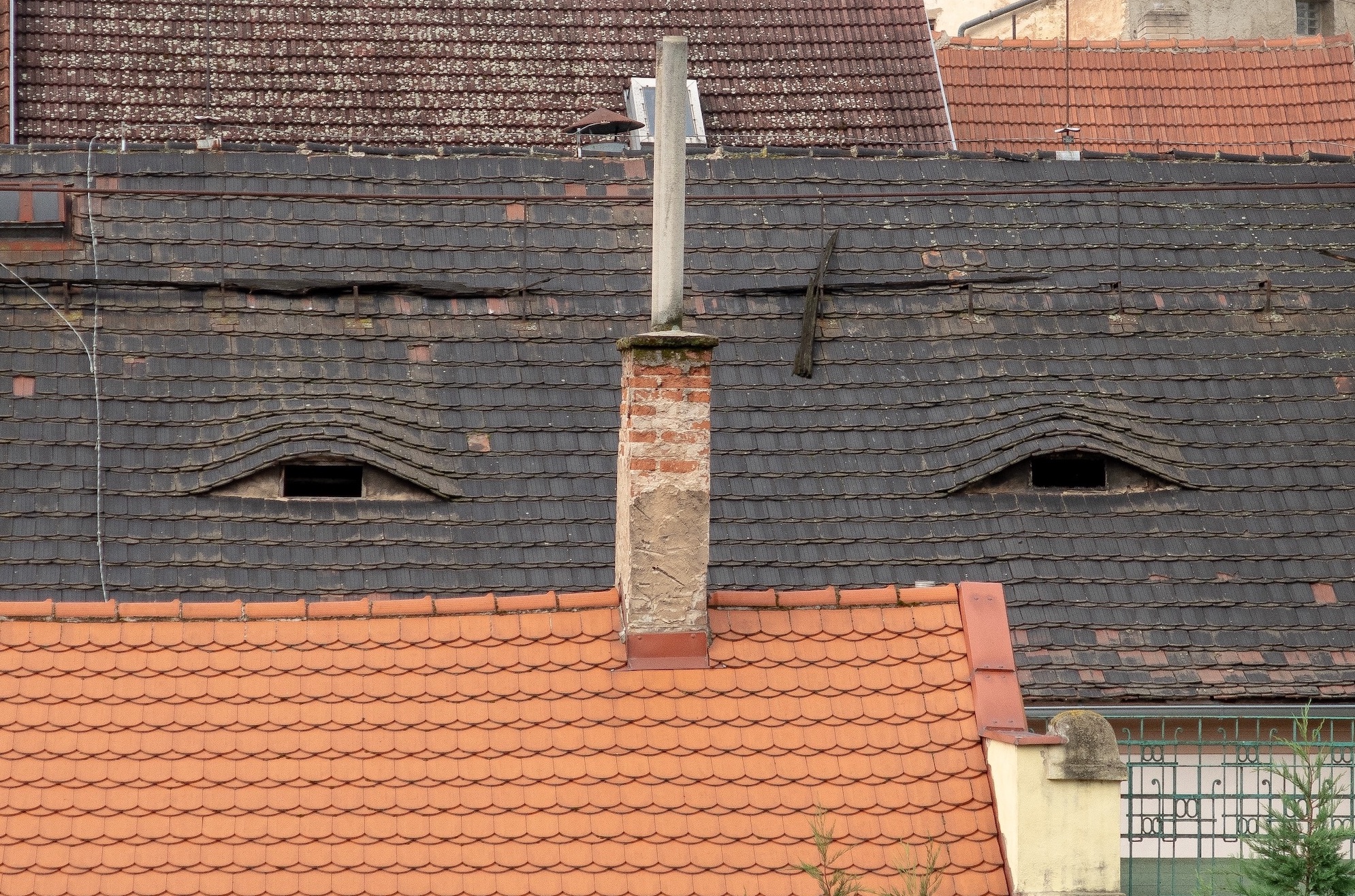 House with roof damage and windows that look like eyes; image by Martin Krchnacek, via Unsplash.com.
Locate and review your policy documents. It will likely lay out the conditions under which the insurance company is willing to pay for a replacement roof and whether or not you owe any deductibles.
Take detailed, clear pictures of the damaged parts of your roof, including other damaged areas of the property, if a hurricane or fire caused the damage. If a tree fell, take a picture of where the tree branch split from the trunk. Print these images with a date and time stamp, keep them for your records, and give a copy to your insurance adjuster.
Ensure that the ground surrounding the damaged roof is safe for the insurance adjuster to walk around on and that any debris that may cause harm to the adjuster has been safely removed.
Obtain and keep copies of a quote for work from the professional roofing company you call to make an assessment. Give these to your insurance adjuster.
The type of roofing needed to be replaced is not covered under the insurance company’s policy.
An upper limit of a dollar amount is exceeded by work performed on certain types of damage like hail or wind following a storm.
There was partial damage to your roof in a prior storm that went undetected and unrepaired.
It was determined that an undetected manufacturer’s defect caused the damage to your roof.
You waited too long to file your claim. Most roof insurance policies are 365 days long. If you waited longer than a year to file your claim after the repairs were completed, you may need more time for the insurance to reimburse you.

About Luke Fitzpatrick
Luke Fitzpatrick has been published in Forbes, Yahoo! News and Influencive. He is also a guest lecturer at the University of Sydney, lecturing in Cross-Cultural Management and the Pre-MBA Program. You can connect with him on LinkedIn.