
How to Build a Gun Club: A Guide to Organizing and Starting Your Own Local Gun Club

How to Build a Gun Club: A Guide to Organizing and Starting Your Own Local Gun Club
There’s never a bad time to start a gun club, but there are maybe better times than others. With an emerging global medical police state, the spectre of the most anti-Second Amendment administration in history hanging over the United States, and recurring left-wing riots, now is perhaps the ideal time to start thinking less in terms of gun rights exercised individually and more in terms of collective preparation.Beyond even preparing for potentially disastrous scenarios, starting your own gun club is just fun. In a time when the powers that be are trying to lock us all in our homes and isolate us as much as possible, forging new social connections might be just what the doctor ordered for you. Practical considerations aside, your own gun club can offer you a kind of social outlet you might not have had since high school or time served in the military.But saying “start a gun club” is only a good idea – it’s not practical advice. So if you have any interest in starting a gun club, this article will walk you through it. It won’t be the hardest thing you will ever do in your life and, unlike starting a gunsmithing business or some other commercial enterprise, it will likely start to pay dividends sooner rather than later.Learn by Watching Other Gun ClubsThe best way you can get started with your gun club is by being a member of another one or, at the very least, observing one in action if this is impractical. Even attending a handful of meetings will give you a good idea of how these clubs operate on a weekly basis. While it’s not necessary to have any experience, even a little bit will help you to avoid potential pitfalls when organizing a new group.You can also use the opportunity to speak to the officers of such a group and to pick their brains. What would they do differently if they had it to do over again? What mistakes did they make when they were first opening up their gun club? Do they recommend incorporating as a for-profit or a not-for-profit enterprise? Why? What are the relative advantages of each? While these are all things that you can easily research for yourself using the Internet, it’s worth talking to someone who has walked the path before you to get a sense of how they would walk it if they had it to do over again.Another option is to find someone in your area who ran a gun club that went silent. They might be the person to speak to about why they dropped off the radar, what they would do differently and any advice, support or materials they might be able to provide you in your quest to get your gun club up and running. In some cases, it might make sense to restart this gun club if other members are interested in “getting the band back together,” because you start with a built-in community of like-minded folks.Meeting with Interested PartiesOnce you know enough to have a meaningful discussion with interested parties, it’s time to host your first meeting, which won’t be of the gun club itself. Rather you will meet with interested people, as well as members of the community who have valuable input to provide on starting and operating a gun club. Some people you should actively court for their appearance at your first meeting are:
A representative of the NRA and potentially other gun owner organizations and Second Amendment advocates. While we understand that there are many who do not like the NRA, they are a valuable resource for anyone wishing to start a gun club and their participation is a must.
Government representatives are another area you should scout out. This includes local fish and game wardens, members of the state hunting department or hunting safety coordinators. Such people have a vested interest in ensuring that your gun club operates safely and within the bounds of the law. They will also have valuable advice to offer regarding what works and what doesn’t.
People that you met at your adventures scouting out other gun clubs should likewise be invited to your first pre-meeting. Even if you were unable to do this, you should invite officers from local gun and sporting clubs for the input they can provide. While such people tend to be busy, they also tend to be eager to offer information to those seeking to follow in their footsteps.
A member of the local planning or zoning board can provide information about legal and logistical hurdles that your gun club will likely encounter.
A representative of the local parks and recreation department can advise on similar issues, but also provide you with resources and information about using local outdoor resources.
A representative of the local newspaper, particularly if it is a smaller, community-oriented paper will help you to get the word out and likely provide a bit of positive press for your fledgling gun club going forward.
A friendly member of the local city council or similar can go a long way toward avoiding any potential legal problems, as well as provide you with information and connections with other people in the community who might be interested in joining or helping out.
Representatives from local businesses are always solid invites, and it’s important to be open and broad-minded about who you will invite. Yes, certainly invite the owner of the local guns and ammunition store, but try to think outside the box a bit. Who in your community owns a business that can get a steady stream of paying customers from your gun club?
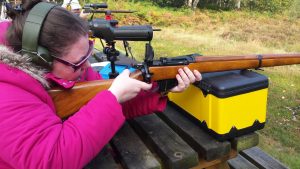 Image by ClaireDellar, via Pixabay.com.
Finance Committee: As one might expect, this is the committee that deals with all financial matters. Balancing the club’s books, raising money, spending money, deciding where money is best invested – these are the tasks of the finance committee.
Application and Permits Committee: If you have a gun club, there’s almost a 100-percent chance that, at some point, you’re going to have to fill out an application or obtain a permit. Any legally-minded members of your club would be a natural fit for the application and permit committee, ensuring that all of your paperwork is in order.
Clubhouse Committee: What is a club without a clubhouse? A clubhouse solves the problem of where to meet and ultimately should also solve the problem of where you and the boys do your shooting, training and other education together. A clubhouse committee doesn’t simply select the spot, it is responsible for the upkeep of the facility and all related expenses.
Facilities and Site Selection Committees: Depending on the size of your club, these committees might be folded into the clubhouse committee, or you might have these instead of a clubhouse committee, or they might be two separate committees entirely. Anything to do with securing a place to operate will fall under the jurisdiction of these committees.
Environmental restrictions established by the city, state and federal governments with regard to the land.
Access to the land. Somewhere easier to get to is better than a place that requires a mile hike into the woods.
Costs associated with the land, which will not be limited to purchasing the land. There are also the legal costs associated with getting the land approved, as well as any improvements, renovations, or construction that needs to be done.
Ordinances that apply to the area, such as restrictions on how much sound can be made at what hours and other factors that will limit your use of the range.
Community relations are a subjective but important factor. You don’t want to make enemies of your neighbors right off the bat. So a neighborhood that doesn’t want you around is less attractive than a neighborhood that does – or an area with no neighbors at all.
Safety will largely be covered by zoning and planning laws, but you will want to make sure that your area is a place where you can safely shoot.
Five members over the age of 21.
Three elected officers.
At least three elected officers or directors must have NRA membership.
Insurance for members.
Commissions for recruiting new members to the NRA.
Discounts on certain services provided by the NRA.
Attorney referrals, which can come in handy when dealing with club-related legal issues.
Educational materials at no cost or a discounted cost to you.
A ready-made charter written by the NRA that has been used by countless gun clubs.
Discounted office supplies, telecommunications services and credit card processing.

About Sam Jacobs
Sam Jacobs is the lead writer and chief historian with Ammo.com, and is the driving intellectual force behind the content in the Resistance Library. He is proud to see his work name-checked in places like Bloomberg, USA Today, and National Review, but he is far more proud to see his work republished on websites like ZeroHedge, Lew Rockwell, and Sons of Liberty Media. You can catch him on Quora and Twitter as well as on the Resistance Library podcast.