How Law Safeguards the Rights of Media Professionals and Artists

How Law Safeguards the Rights of Media Professionals and Artists
In the vibrant world of media and the arts, creativity flourishes at the intersection of inspiration and innovation. However, the path from concept to creation is fraught with potential legal pitfalls that can ensnare the unwary. Whether you're a seasoned filmmaker, a rising digital influencer, or a musician crafting your next hit, understanding the legal scaffolding that supports your artistic endeavors is crucial. This is where the law steps in, not just as a set of rules but as a protective framework that ensures your creative vision can thrive without the looming threat of exploitation or infringement.For media professionals and artists, navigating these legal waters is essential not only to protect their work but also to harness its full potential. From securing the right contracts to safeguarding against defamation, the legal aspects of the arts and media industries are as complex as they are critical. This article delves into fundamental ways in which the law operates to protect the rights of creators like you, ensuring that your journey in the entertainment industry is as smooth and secure as possible.1. The Crucial Role of Entertainment Attorneys As a creator and artist, you're not just birthing ideas but also cultivating a brand and business that can span various domains—whether you're a producer, director, writer, influencer, musician, or involved in new media projects like podcasts. At the heart of ensuring your creation remains your own and your rights are protected under the law stands the entertainment attorney. These legal professionals are pivotal in guiding you through the labyrinth of setting up your business entity, drafting and negotiating agreements, and handling intellectual property matters such as filing for copyrights and trademarks.Entertainment attorneys are integral from the very inception of your career, aligning their strategies with your short and long-term goals to safeguard your creative output. Whether you're dealing with the formation of contracts or navigating the complexities of entertainment law, they provide the expertise necessary to protect your work in a rapidly evolving industry. For instance, Ameri Law represents a diverse range of creators, including motion picture and television producers, social media influencers, musicians, NFT creators, and authors, ensuring tailored legal solutions that resonate with the specific needs of each role in the entertainment sector.2. Copyright Laws: Protecting Creative Output Copyright laws form the backbone of protection for artists, granting you exclusive rights to your creations, from music tracks to novels and everything in between. These laws ensure that you maintain control over your works—how they are reproduced, distributed, and publicly displayed. Crucially, copyright protection kicks in automatically once your work is created and fixed in a tangible form, providing immediate security without the necessity for registration, though registering can offer additional legal benefits.For media professionals and artists, understanding the scope of copyright laws is essential. It allows you to leverage your rights for economic benefit through licensing agreements or direct sales while also providing recourse in cases of unauthorized use or plagiarism. The law not only aids in securing your creative assets but also in litigating infringements, which can be crucial for maintaining your market position and income.3. Defamation Protection for Media Personnel Legal safeguards exist to protect journalists, broadcasters, and other media figures from false statements that could harm their professional standing or personal life. Defamation law allows you to challenge and seek redress for libel or slander that unfairly tarnishes your public image.These legal provisions are particularly significant in an age where digital communication can amplify harmful content exponentially within hours. Having robust legal strategies and the right representation can make all the difference in managing the impacts of defamation, ensuring that media professionals can continue their work without undue reputational harm.4. Digital Rights and Internet Law As the internet becomes the primary platform for content creation and dissemination, understanding digital rights and internet law is paramount for media professionals. This legal area covers a range of issues, from digital copyright infringement to online privacy and data protection. Laws in this domain are designed to protect the works of artists across digital mediums, ensuring that copyright, trademarks, and other intellectual property rights extend to the digital arena.Additionally, these laws address the complexities of content distribution over the internet, where jurisdiction can be tricky, and infringement might be widespread. By navigating these laws, creators can better manage how their content is shared, accessed, and protected online, ensuring that their rights are respected globally.5. Freedom of Expression and Censorship Laws Freedom of expression is a fundamental right crucial for media professionals and artists, allowing for the free flow of ideas and information without undue governmental restraint. However, this right is balanced against other societal needs, such as maintaining public order or protecting other people's rights and reputations. Censorship laws delineate these boundaries, often contested and negotiated through legal and societal debates.
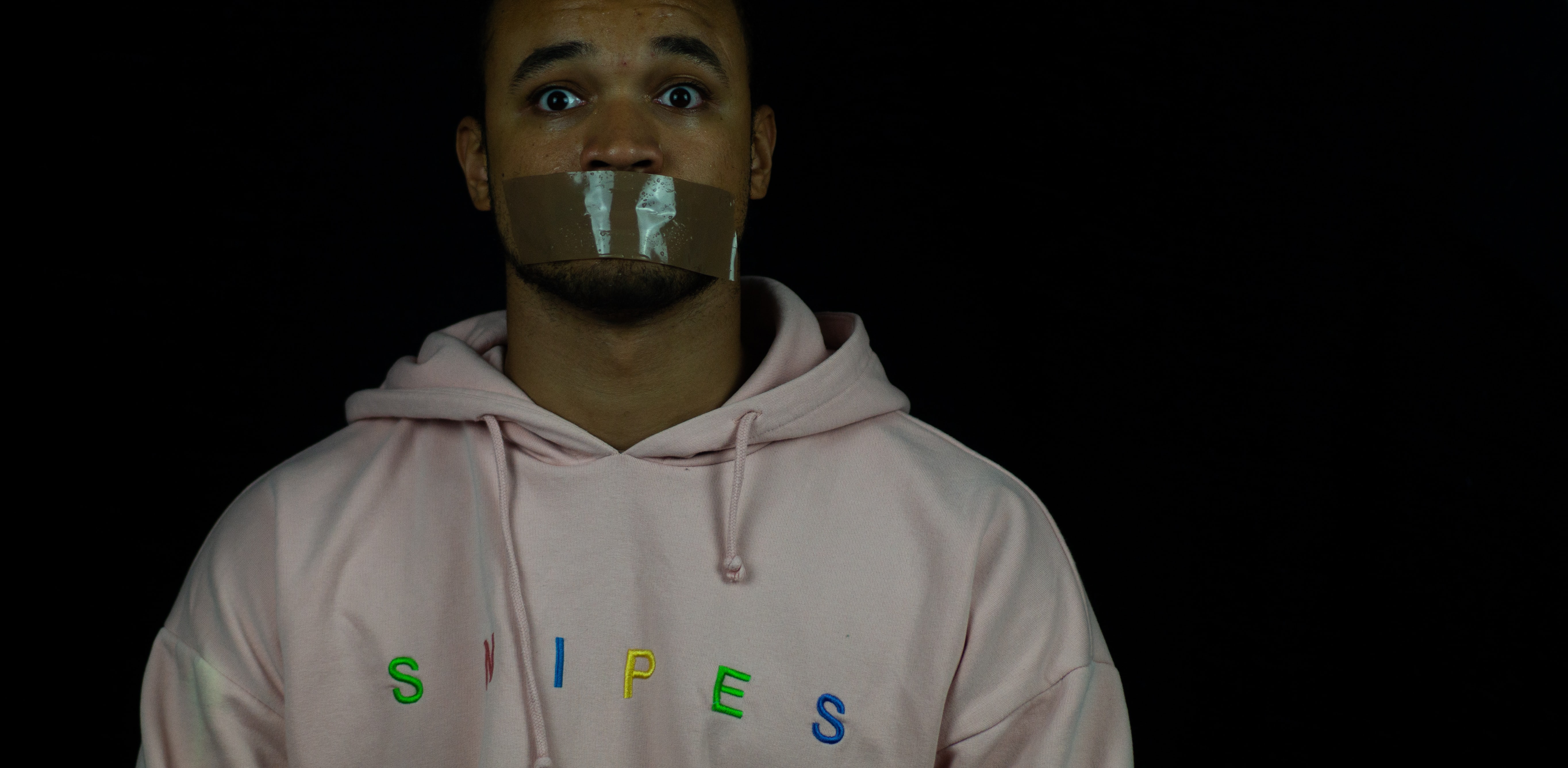 Man in white hoodie with mouth taped shut; image by Khadim Fall, via Unsplash.com.