Gulf Bends Over for Offshore Drilling
Gulf Bends Over for Offshore Drilling
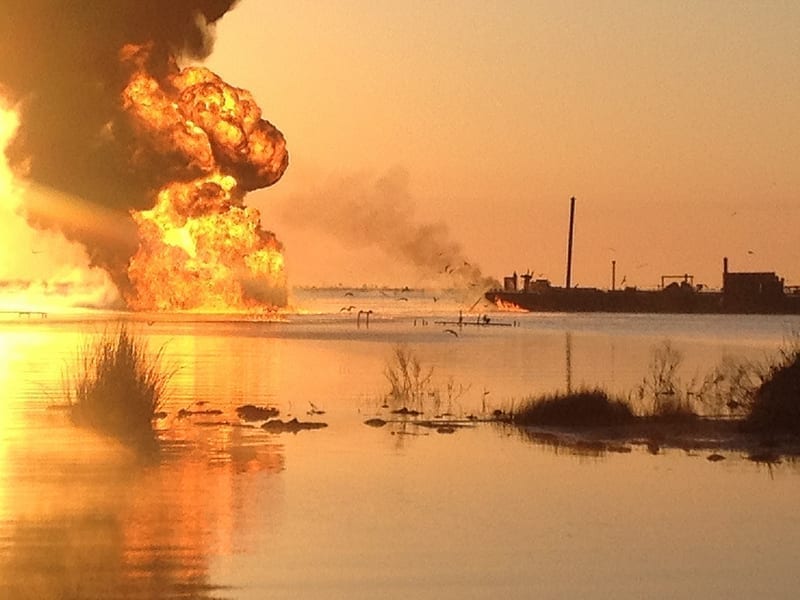
Oil. Our modern economy can't exist without it. It powers our transportation, feeds our growing population, provides a cornucopia of plastic products (and oceans of plastic waste), precipitates wars, fouls our environment, and burning it raises sea levels. Our cultural response to the black, sticky stuff is equally complex and internally contradictory. With offshore drilling back in the news, it's worth thinking about what we're willing to accept in exchange for oil.Louisiana is one of the states most involved with the benefits – and costs – of the American oil industry. At the intersection of the Mississippi River and the Gulf of Mexico, where offshore drilling is a major part of the economy, residents of Louisiana depend on oil not just to keep them in vehicles, food, and plastic, but also jobs. Unfortunately, both the ecological cost of oil consumption and the companies involved in offshore drilling are directly and negatively impacting Louisiana.In March, the Fifth U.S. Circuit Court of Appeals stopped a 2013 lawsuit by the Southeast Louisiana Flood Protection Authority against several major players in the oil and gas industry. The lawsuit alleged that the collective actions of 92 oil and gas companies caused erosion of coastal lands, leaving southern Louisiana increasingly vulnerable to flooding, damage, and loss from hurricanes and tropical storms (which, themselves, are expected to increase in number and severity in a changing climate). The Flood Protection Authority asserted that the industry was responsible for backfilling and restoring canals dredged into sensitive wetlands once they were finished with them, but the court dismissed the case based upon jurisdiction and a lack of an implied legal duty on the part of the industry to clean up its own mess. If it's going to get done, it's up to the taxpayers to subsidize corporations by taking on the costs, but not the profits, of doing business.Over to the east, Florida has its own offshore drilling troubles. Florida's waters yield very little oil, just 0.1% of our domestic production. It makes sense, then, for Florida to concentrate on the other, more lucrative economic benefits of its stunning coastline, such as tourism. Currently, Florida bans offshore drilling for 225 miles, so that its scenic beauty won't be ruined by ugly oil rigs. Legislation introduced in Congress would roll back that moratorium and give other states incentives to expand drilling, but nevertheless, Florida persists.
 Offshore drilling platforms: not what you go on a Florida vacation to see. Photo by Berardo62, via Flickr. CC BY-SA 2.0
Sources:
Foster Campbell: Coastal ruling lets oil companies off the hook, shows lack of concern
Board of Commissioners of the SE LA Flood Protection Authority-East vs Tennessee Gas Pipeline Company LLC, et al (PDF)
Nelson fights to keep Gulf oil drilling ban
Greens sue Trump over offshore drilling order
How Satellite Data Caught Gulf Oil Companies Hiding Enormous Oil Spills
Blobs of Exxon-Valdez Oil Are Still Fresh on Alaska's Beaches
About Dawn Allen
Dawn Allen is a freelance writer and editor who is passionate about sustainability, political economy, gardening, traditional craftwork, and simple living. She and her husband are currently renovating a rural homestead in southeastern Michigan.