
Where We're Going, We Can't Afford Roads
Where We're Going, We Can't Afford Roads
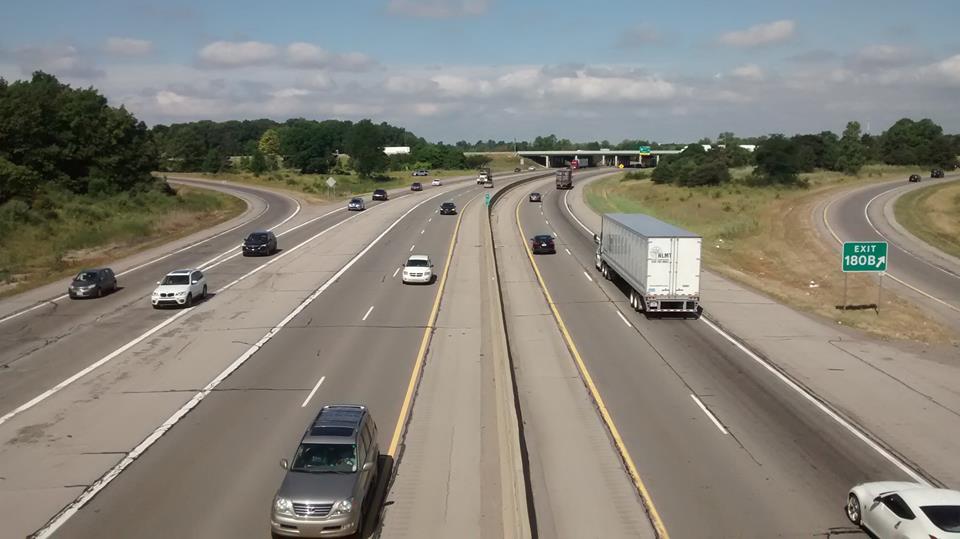
Public roads are one of those expenses people point to when trying to come to a bipartisan agreement about the legitimacy of taxation. You like civilization, don't you? Taxes are how we fund roads, bridges, schools, and rule of law. Unlike a military buildup or endowments for the arts, roads are expenditures that everyone uses and upon which almost everyone can agree. Unfortunately, roads are also expensive. As we bifurcate into a small population of very rich (who often prefer to hide money offshore or lobby for tax cuts rather than contribute to civilizational upkeep) and a much larger population of have-nots (whose means may not even reach a sufficient level to support paying an income tax), the combination of won't pay or can't pay means that this may be where the pavement ends. In short, where we're going, we can't afford roads.In Michigan, roads (and their level of disrepair) are a perennially hot topic. Car culture and suburbanization require vast networks of paved roads, but icy winters and the freeze-thaw dance of spring eat away at those roads almost as fast as they can be patched. Unionized road construction crews, who still want to be the kind of hardworking middle class taxpayers that keep civilization running, have been involved in a labor dispute with Michigan Infrastructure and Transportation Association, a construction industry group representing road contractors doing work on Michigan's roadways. With workers locked out since, ironically, Labor Day, Michigan's Governor Rick Snyder considered bringing in the National Guard to make repairs. However, the lockout is solved for now. Workers will begin fixing what they can before the snow flies, but they won't get to every repair, and they're working without a contract.With so much ado about how to get the roads fixed and who will fix them, there's surprisingly little concern over bigger questions, like how we will afford roads and whether it's the system that should be fixed instead of the roads themselves. In recent years, funding cuts and a shrinking tax base have reduced the amount of money available for municipalities to keep on top of infrastructure repairs. Unable to afford roads or repair potholes, local and county governments in 27 states decided instead to use scant funds to grind up decaying blacktop and turn paved roads back into gravel. Reaction was mixed but it's safer to drive on gravel than on asphalt that's filled with holes and cracks.Finally, how will we continue to afford roads (or any other infrastructure) when the investments made in them don't repay the cost of replacing them when they finally wear out? Strong Towns, a nonpartisan nonprofit organization devoted to smart urban planning, has been concerned with this question for years. Even if roads are built with grant money or federal funds, maintenance and replacement costs usually fall to localities. Strong Towns found that it took, on average, 37 years for the taxes collected from rural residents along paved roads to add up to enough to replace roads that last 25 years, clearly not a fiscally sustainable investment.
 The traffic light at the intersection of Berry Street and Evans Avenue in Fort Worth, Texas. This thoroughfare has the characteristics of a "stroad." Photo by Dark Serge, courtesy of Wikimedia Commons. CC BY-SA 3.0
Sources:
Snyder considers use of National Guard for road projects amid labor dispute
Gov. Snyder: Deal ends construction worker lockout, restarts stalled road projects
In Small Wisconsin Towns, Paved Roads Return To Gravel
Cash-Strapped Towns are Un-Paving Roads They Can't Afford to Fix
Omaha’s Answer to Costly Potholes? Go Back to Gravel Roads
Tight Budgets & Rising Costs Cause MN Counties to Consider Unpaving Roads
Freeways aren't free, and Texas politicos don't want to pay
The Growth Ponzi Scheme, Part 1 and Part 2
What's a STROAD and why does it matter?
About Dawn Allen
Dawn Allen is a freelance writer and editor who is passionate about sustainability, political economy, gardening, traditional craftwork, and simple living. She and her husband are currently renovating a rural homestead in southeastern Michigan.