
A Moment to Consider Food System Collapse
A Moment to Consider Food System Collapse
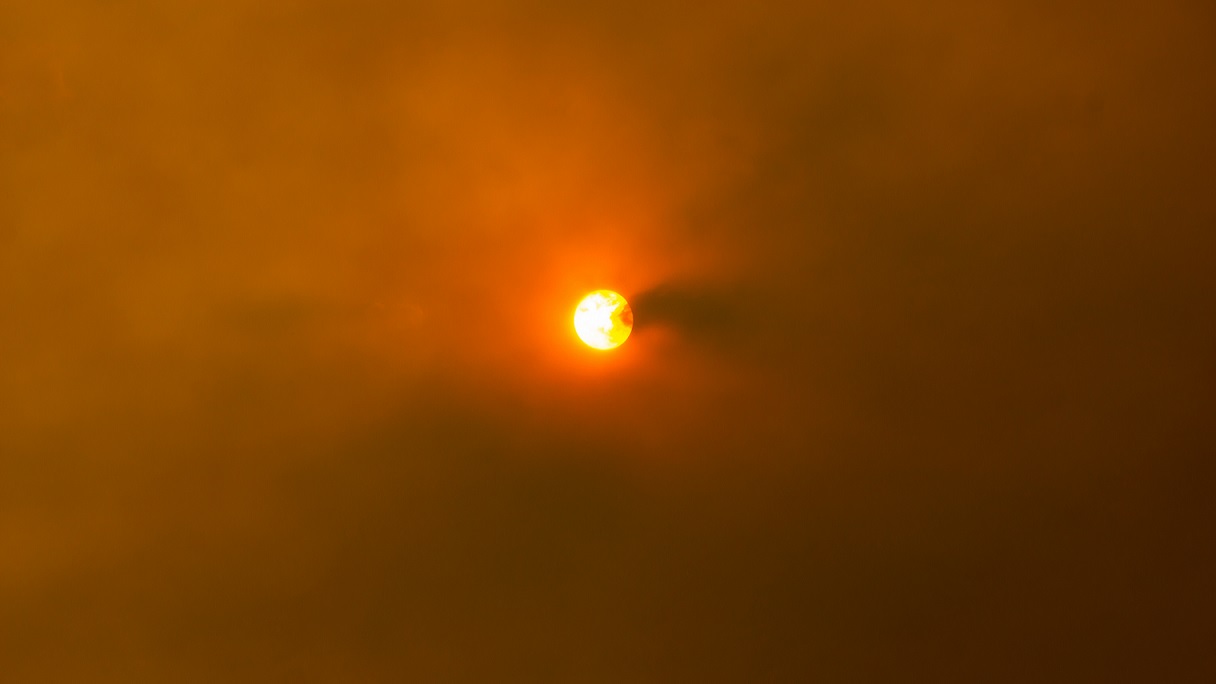
In this culture, climate change too often seems like a far-off worry that could affect our grandchildren unless we all eat more legumes and switch to EVs, but smoky skies in New York last week rubbed the easily forgettable reality right in our faces so clearly that more people are starting to realize how bad it really is. While the apocalyptic orange scenery has your attention for a moment, please consider another alarming effect of the climate chaos that is, even now, gearing up for approach: the eventuality of large-scale food system collapse.The first volley, as usual, is rising food prices. Even if all the world's signatory countries meet their Paris Agreement targets (hahaha!), food prices are still headed upward as baked-in climatic instability is here to stay. Erratic rainfall, untimely frosts, droughts and floods, scorching summer temperatures, and yes, even wildfires and their windblown smoke, cause havoc for farmers, decimate crops, and make food more expensive, possibly pricing poorer nations and families right out of the food market.As available resources like fresh water and topsoil dwindle, it's easy to imagine conflicts brewing around rivers and the remaining arable land. Just as the Russian invasion of Ukraine precipitated crises for farmers and hungry people in Africa and the Middle East, tensions like those between urban and agricultural water consumers in the American West, or between French farmers vying for limited pools of water, could explode into bigger fights.But wait, there's more. Far more.Professor Jem Bendell at the University of Cumbria, in the UK, released research last March which identified six hard trends which, cumulatively, point toward food system collapse. It's worth reading the paper for yourself, but here's the fast-forward summary of the trends Professor Bendell found.First, we're hitting the upper limit of how much food modern farming methods can produce. Past technological breakthroughs like the Haber-Bosch process, which fixed atmospheric nitrogen into ammonium nitrate for military (and, later, agricultural) purposes, certainly amped up food production, but the rate of technological innovation has slowed. What's more, due to population growth, urbanization, development, desertification and degradation, there is no longer as much agricultural land on which to grow that food.Second, our industrial culture is breaking the the natural world. This is where the effects of air and water pollution, loss of soil fertility, and collapse of pollinator species combine to reduce agricultural yields.Third, modern food cultivation and distribution rely on declining fossil fuels, and, indeed, would not be possible without such unsustainable inputs. Massive centralization of agricultural land in fewer hands means that farmers depend upon diesel-powered machinery to plant, harvest, process, and transport crops. About a third of global energy consumption and greenhouse gas emissions can be attributed to modern food production.Fourth, climate change is accelerating faster than expected, thereby making it harder to grow crops and produce food in the large quantities that modern civilization depends on. Extreme weather events like intense storms, droughts, floods, wildfires, and so forth, make agriculture less reliable. Failures of multiple breadbasket regions becomes more likely.Fifth, demand for food is high and can't be easily reduced. A growing population, fed by a growing food supply, now requires a permanently large food supply to feed all those people. Not only do they need more total food, but there's a strong demand for more intensive food products, such as meat and dairy, especially as incomes rise and people who once lived in poverty have more disposable income.Sixth, the globalized food system has been optimized for efficiency over resilience, and profit more than feeding the most people. Often, countries which most need food are the least able to afford to buy the food they need. Meanwhile, foodstuffs have become commodities that are manipulated for financial gain for a relative handful of big players. Centralized production, monocropping, and just-in-time distribution may be very efficient, as long as there are no disruptions. How long will there be no disruptions?
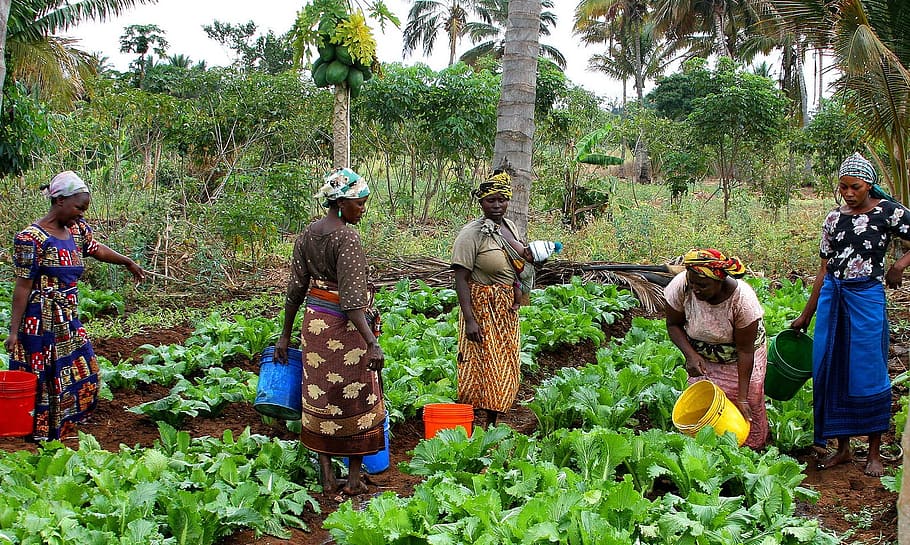 Women working on a farm in Tanzania. Smallholders may produce more calories per acre than monocropped megafarms. Photo courtesy of pxfuel.com.
Sources:
Bendell, Jem (2023) Beyond fed up: six hard trends that lead to food system breakdown. Institute for Leadership and Sustainability (IFLAS) Occasional Papers Volume 10. (Unpublished)
New York therapists see surge in eco-anxiety as smoke fills skies: ‘Every client addresses it’
Is climate change fuelling Canada's wildfires?
How climate change is raising the cost of food
Global Carbon Removal Efforts Are Off Track for Meeting Climate Goals
Michigan farmers already facing drought-like conditions now dealing with smoke
Orange skies are the future. Prepare yourself.
Record Pollution and Heat Herald a Season of Climate Extremes
A year of hunger: how the Russia-Ukraine war is worsening climate-linked food shortages
‘Til the Last Drop: As Water Grows Scarce in Utah, Urban and Rural Needs Come to a Head
Why French farmers are fighting each other over water
Arizona, Low on Water, Weighs Taking It From the Sea. In Mexico.
Upward Farms throws in towel ten years after founding vertical-farming business
Shuttering Coal-fired Plants in US Improves Crop Yields
Global starvation looms as food price rises intensify
About Dawn Allen
Dawn Allen is a freelance writer and editor who is passionate about sustainability, political economy, gardening, traditional craftwork, and simple living. She and her husband are currently renovating a rural homestead in southeastern Michigan.